The quickest way to start losing weight is to start believing that you can. It takes mental discipline as well as a healthy diet and exercise to lose weight and keep it off. Achieving mental discipline is not as hard as one might think and you can start right away. Discipline is defined as “the ability to do the right thing even when no one is watching”. Mental discipline could then be defined as “the ability to control your thoughts when you’re not thinking”. Using mental discipline to lose weight is the ability to stay strong in a moment of weakness. Unfortunately, moments of weakness occur rather frequently when dieting. Imagine that your diet has been quite successful and your target weight is seemingly reachable in less time than previously imagined. Suddenly, just when success is in sight, a weekend from hell occurs and before you know it, you’ve skipped two workouts and consumed every Little Debbie and Pringle in sight, and when no one was watching, you secretly ordered take-out.
I need to lose weight
Having a strong sense of mental discipline may prevent that disaster from ever occurring. Occasionally we will give ourselves the green light to be bad. Then we make promises to ourselves such as working out harder during the next workout or skipping lunch or dinner, which is extremely unhealthy. Having mental discipline keeps your mind strong and your willpower in tact when you are consistently challenged during the course of a day. By properly programming your mind, you become able to override and overcome ingrained eating habits, and your energy level will naturally increase because you’ve stuck to a healthier diet. Skipping workouts is less likely to occur as well; in fact you’re likely to start looking forward to them.
I am finally reaching my weight goal
Create a vision of yourself having already lost the weight you feel you need to lose. Think about what you are wearing. Think about how you would feel. Confident? Ready for anything? Train yourself to think of this vision when you wake up, then keep the vision on your mind when you are in the shower, as you get ready for work. Think about this vision on your bus ride or drive into the office. After a couple of days, it becomes natural and easy. Remember, a belief is nothing more than a series of thoughts. It won’t be long before you start believing this vision is an attainable version of you! Suddenly, eating healthy is easy and working out is no longer the chore it once seemed. Achieving mental discipline will stop the sabotage from occurring and losing weight will no longer be the proposed chance of failure it once was. If you have decided that losing weight is your goal, and you want it bad enough, you must first believe that you can lose weight. Most people program themselves for failure not even realizing it. With mental discipline, and a strong desire to succeed, anyone can lose weight, and keep it off.
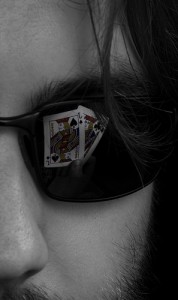
With the recent popularity of televised “Texas Hold ‘Em” poker games comes a new world-wide craze for poker and the strategies involved in winning. It’s no secret that more than half the skills needed to win at poker are about reading your opponent’s moves and body language, commonly known as “tells.”
Often times, players are unaware of what the subtle moves their body, eyes and behavior give away about their hand and how they feel about it. It’s especially true for players just out to have fun and maybe make some extra cash on a weekend in Vegas. A great poker player is constantly observing the tells and can pick up on when someone is trying to bluff their way out from behind a not-so-good hand. Understanding and picking up on these tells are half the strategy of the next move.
When it comes to reading the subtle clues of your opponent’s behavior during your games, it begins by just paying attention.
Cool detachment. Yes, the stakes are high, and your nerves are rattling. But get out of the emotion of it by stepping into the director’s shoes, as opposed to being the actor on the stage. As the actor sitting at the poker table, your focus needs to remain engaged in the action there, but a part of you must also learn to step back and observe the scene from a broader range. From this detachment, you will be free to remove yourself from reaction and position yourself in a new controlled position of action and control, always the more powerful place to be.
Size Them Up. Even before you sit down, begin to take mental notes on the other players at your table. Also remember to work quickly and concisely, because here, time really is money. Notice who the big bold players are, and also who the shyer, more reserved players are. Bold players will sit differently. They take up the whole chair, with bigger hand and arm movements, and often speak intentionally louder than everyone else, as a way to control the conversation. The less assured players will be sitting back trying to cover their cards with their hands and purposefully not making eye contact. Also remember that players will react differently during the shuffle than they do while the hand is being played.
Learn the Tells. Look for any physical reactions going on with your opponent—eye twitches, blinking, fingernail biting, or any other tiny gestures they might be making. Notice what their breathing is like, but don’t jump to conclusions until you have studied this behavior. Accelerated breathing can often indicate good cards, but a great poker player will know to fake this to throw you off. Any color change in the skin, shifty eyes scanning what is left of the chips or gazing off as if distracted, shaking, jittery or fidgety movements. Watch, and wait, and see.
Spend some time studying. Spend some time playing the table, watching and observing if indeed this particular tic precedes a good hand for them, or if this rubbing the eye always comes before a bad hand. Pay attention, because over time, you will get a gut feel for what you are picking up as the observer. As you watch the patterns of the players you start to feel the specific expression of everyone’s tells.
Become aware of your own tells. Be exceptionally aware of the messages you are giving off. Don’t make any moves without forethought as it how it will affect your opponent, based on what you read in his tells. You might even have to spend some time practicing controlling your tendency to fidget.
I got this hand in the bag!
Sometimes, you want to make them think your hand is good. Commonly, a player will react meekly if they wish to throw you off. A good player will mix up their intentional tells, sometimes coming on strong with a great hand, sometimes playing it back. This kind of strategy is an equal part of the process of being an exceptional player. Acting in this way is considered a valuable skill in high stakes poker, almost as sly as counting cards.
Discover the pattern of the other players’ behavior. Is it that they begin to talk when they had been quiet? Are they holding their arms differently? Open or protective? They may start talking when they were previously quiet. They may cross their arms differently or even hold their cards in a more protective manner. The keenest observer and shrewdest actor will be the big winner at the end of the day.
Ignore the stare-down. Other players will inevitably try to intimidate you. One of the best defenses against this tactic is to purposefully stare back no matter what shape your hand is in. Be sure to not be consistent with your inconsistent responses!
Forget the distracters. Poker players will go to great lengths to stretch the boundary of acceptable strategy. Some fakers will make disgruntled noises, or get loud and jocular, just to confuse you. Stay focused, detach and turn the tables by being in control of your own tells. Make these showboaters think they are getting to you, just to throw them off.
When reading other players, understand pros won’t allow you to read them, which is why they are, of course, pros. However, most every game has amateurs, which you should be able to spot rather quickly.
What my eyes tell me that no one else sees
No one is completely immune to giving off tells. But with patience, practice, perseverance and skill, over time you can learn the fine art of poker tells and how to exploit this information to gain advantage. If you spot a tell that means your opponent has the advantage, lay down your cards before the flop; when you find a player who is showing weakness, raise your bet. Just one more tool to get the win.
Addictions manifest in many ways. Some turn a fun hobby like shopping into a financial nightmare. Other times, addictions pose health risks, especially when the addiction is drug or alcohol related. It really does not matter what you are addicted to. The only thing that matters is that you realize that you have a problem and are ready to take the steps needed to take your life back. In this fight, your mind is your biggest ally. It has all the power you need to get back on a healthy track.
You need to get to the root of your problem. Your problem is not with any substance or activity. Your problem is with what drove you to seek refuge in an addiction. Maybe it is to fight boredom. Maybe it is to get a rush. Whatever it is, you need to figure out what drives you to put your life on hold for an addiction. When you have it singled out, find healthy alternatives to receive the feelings that you crave.
Notice what is going on around you when you get an urge to partake in you addiction. If you figure out your trigger, you can plan to avoid any situation that will make you weak. In the beginning of the fight with addiction, you will need to stay away from obvious stressors and triggers in your life. Eventually, you can work up the strength to stare down the habit and walk away clean.
I am addicted to Smoking
The next step in this basic method comes in week two. Make a note every time you want to indulge in your addiction, and also make a note of what’s going on around you at the time. For example:
Cigarette craving 1:00
Just ate lunch
Smoked 1 cigarette
By keeping track of what happens when you have a craving or a need to do something, you can find your triggers, and make yourself realize what causes the urge – and then find a way around it. If you always have a cigarette after lunch, try something new in your routine for at least three weeks. For example, instead of going to a café where smoking is allowed, eat lunch at a different restaurant. Don’t give yourself time to smoke after you finish eating, either. Go right back to work. We are creatures of habit, and addictions are all about breaking these habits. Did you know that you can form a new habit in as little as 27 days? Don’t use chemical dependency as an excuse. Once the withdrawal phase is over, your road blocks are purely in your mind.
Addictive Gambling
Your new daily routines and habits should reflect your new life. Do not stay in the same patterns that you did while you were in full throws of addiction. This trap sets you up to fall back in to repeated patterns, including the ones that drove you to addiction. Vary what you do day to day. This will keep you open to better and more healthy life choices.
As you face your addiction, remember this fight will be for your life. You need to stay strong and take back control of your life. You can and will do it if you put your mind to it.
Everyone’s told a lie– you, your friends, your boss, even your perfect “role model” mother. But the only reason you’ve ever told a lie was to help someone else, or yourself for that matter, out of a very sticky situation…right? Or are you just lying to yourself now? Either way, considering the fact that almost everyone on the face of the earth has lied at one point or another, we sure are lousy at picking out the most malicious liars among us. You might think you have a good sense of when someone is telling a tall tale, but you’ll find that when you know how to read the signs, spotting the falsities in your perpetually late co-worker’s excuses or even the faults in your spouse’s multiple cover-ups can really save you some strife in the long run. So, without further ado, here are 10 habits shared by Lying Larry’s and Fibbing Franny’s around the world.
1. Averted gaze: It’s not normal to expect someone to maintain full eye contact for the entirety of a conversation…unless they have some sort of disorder, and that’s another story in and of itself. However, if you notice any difference in the amount of eye contact the suspected liar is making, that could be a clue that they’re not telling the truth. In fact, even the direction of the gaze makes a difference when trying to figure out someone’s intentions. It has been noted that when trying to recall a fact, most people with avert their eyes upwards and to the right. A person who is trying to come up with a lie, however, will usually look down.
2. Too much eye contact: Just as a liar may avert his or her gaze to keep someone from looking into their eyes (it’s been long said that you can see the truth in someone’s eyes, therefore liars may try to avoid this result by looking away altogether), someone trying to cover up a lie may also make too much eye contact. This comes as a result of a reverse train of thought by the person in question. More experienced frauds may know that people are expecting them not to make eye contact and therefore counteract this by making prolonged eye contact, to the point of abnormality.
3. Stuttering: Telling a lie, especially a more in-depth one, takes a lot of effort on the fibber’s part. So much effort, in fact, that in the process of telling it, people tend to get tripped up. Think about it– if there’s something big at stake, it takes enough effort to remember and relay an actual string of events. Liars charge themselves with the duty of not only coming up with a fake string of events, but also coming up with it on the spot as well as double-checking every word they say seconds before they say it, meanwhile paying strict attention to every word they say for fear that they’ll be asked to repeat the same story later. Makes you almost feel sorry for them doesn’t it? Nah.
She tells nothing but lies
4. Sweating: It’s a natural nervous reaction. Most people sweat or get sticky palms when speaking in public, making an important decision, waiting on significant results, etc. But if someone is sweating during an everyday situation, that could be a tip-off that they fear getting caught in their lie.
5. Abnormal expressions: As in the case of liars making too much eye contact, they may also go too far when it comes to showing they are at ease to throw you off. If someone holds a facial expression for too long, such as a smile, or other expressions/gestures, take that into consideration.
6. Fidgeting: This may be a person’s way of diverting your attention, therefore breaking your concentration on the facts of the story they’re telling you. It may also be an uncontrollable nervous habit. Whether someone fidgets with an outside object or takes up a nervous habit such as tapping their feet or twirling their hair, these are all signs that your culprit may not be fully at ease and in the midst of spinning a tall tale.
7. Changes in pace: Beyond the obvious stuttering through sentences, more experienced liars might try to disguise this dead giveaway by pausing excessively. You can watch for this by noticing where in the sentence or story the person pauses. If it’s right before an important detail, or maybe before a detail they have relayed to you previously, this could be a sign that they are trying to straighten up their story in their head before it comes out of their mouth. Also, if the person pauses at irregular times such as the middle of a sentence (in the absence of a transition), they could be trying to let their voice catch up with their mind.
This girl can't keep a secret
8. Changes in tone of voice: When someone is spinning a story, they are usually concentrating too hard on coming up with the details for their body to focus on what it is normally able to focus on. This may cause a person’s voice to crack, which is almost a dead giveaway of a lie being told.
9. Any other changes in bodily functions: As noted above, people actively engaged in making up a story that isn’t true, while also trying to double-check the details of this story in their mind, while also trying to remember the details in case they have to recall them later…don’t usually have time for much else. As a result, functions such as blinking, swallowing and breathing may become abnormal. For the most part these changes will manifest themselves in the form of increased levels of all of the above (all going back to “fight or flight” reactions—also known as modern day nervous reactions).
10. Being overly vague: To lighten the load on themselves, fibbers will often not tell too many details of any story they’re asked to recall. And wouldn’t you do the same? Given the difficulty of telling a solid lie (noted several times thus far), it is much easier to keep it simple until further request. So give these people a run for their money—if they’re too simple, ask for further explanation, and then look for the signs noted above.
For the most part, pegging the aforementioned signs as a tip-off of a lie comes down to knowing the person in question. On any given day, any given person could show any of these signs, while also remaining perfectly innocent. But if you know someone’s normal tendencies, it becomes that much easier to peg these signals for what they really are, therefore catching their insincere act and taking proper actions. Ready to try it out but have no one to try it on? First, thank whatever higher power you might believe in…or your mom and dad for teaching you not to hang around liars. Then, go record the daytime court TV sensation of your choice and have at it.